Tuesday, 28 December 2021

FANO

 2022-01-01


Fano:

 A living saviour of the Amhara people

And the Ethiopian spirit

ፋኖን እወዳለሁ፥ ፋኖንስ አልጠላ፣

ተኳሽ እወዳለሁ፥ ተኳሽም አልጠላ፣

ሲደክመኝ አርፋለሁ፥ በጎፈሬው ጥላ።

ፋኖ አገሩ ገባ፥ ሳይሰናበተኝ፣

እሸኘው ነበረ፥ ምንም ቢታክተኝ።[1]

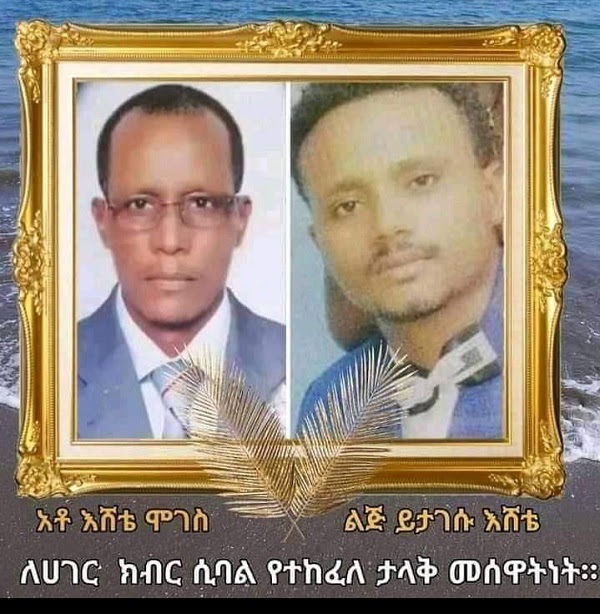
This song and the article is dedicated to Eshete Moges and his son Yitagesu Moges.


Contact information:

Girma Berhanu (Professor)

Department of Education and Special Education

University of Gothenburg

Box 300, SE 405 30

Göteborg, Sweden

E-mail: Girma. Berhanu@ped.gu.se


Introduction


Fano is a historical term used in Ethiopian struggles against injustice and foreign invaders. It is mainly shown as a youth movement that has played a significant role in preserving the concept of Ethiopian nationhood. As a youth group, it has emerged from within the Amhara ethnic group and has features of reminiscent of classical political, religious, or even social movements that drive youthful frustrations into acts of agitation until they achieve a measure of reform. Traditionally, the Fano struggle had focused on fending off attacks against Ethiopia. In recent years, Fano has become a household name and a crucial movement tasked with saving the very existence of the Amhara population as well as the integrity of Ethiopia. In this, it differs from other similar youth movements in the country, whose aim is to dismember the Ethiopian state into ethnic components. Fano is made of a defiant and patriotic youth which is able to shoulder an Ethiopia that is arising from the ashes bequeathed to them. This revolutionary generation and movement has to be nurtured. Fano is not just an embodiment of the physical defiance but also an intellectual movement that abhors ethnic fascism, narrow nationalism, apartheid policies, internal colonialism and all forms of pseudo-legal acts of political corruption. Instead, it upholds a civic sense of public duty, patriotism and vision for the good of the entire country.

 The purpose of this paper is to provide an objective insight in to the Fano and explore its potential as a powerful social movement that has the potential to transform the course of Ethiopian history that has been “soiled” by ethnic chauvinists and radical ethnically-based movements. Indeed, youths have been deeply important to every progressive social movement, including the United States Civil Rights movement, successive waves of feminism, environmentalism and environmental justice, the labor, antiwar, and immigrant rights movements, and more. In each of these cases, young people took part in many ways, including through the appropriation of the “new media” tools of their time, which they used to create, circulate, and amplify movement voices and stories. Unfortunately, youths are nowadays framed by mass media as an apathetic, disengaged, and removed generation. At worst, the youths (in the U.S., particularly the youth of colour) are subject to growing repression: increased surveillance, heightened policing, stop-and-frisk policies on the streets, overbroad gang injunctions, and spiraling rates of juvenile incarceration.[2] I discern some similarities with the experiences of the Fano in Ethiopia that is repression and increased surveillance. In this article, I argue that we have much to learn from our Fano who are already engaged in mobilizing their peers, families, and communities towards defending the marginalized ethnic groups in Ethiopia and fostering positive social transformation. I discuss key challenges, and provide recommendations for educators and adult allies of this defiant youth movement.

The philosophical foundation/methodology that undergirds this study is critical theory with elements of post-structuralism and post-colonialism. The strategies used to collate and collect data is meta-analysis (data synthesis), some form of discourse analysis, personal accounts, and a limited amount of sociological introspection. The study shows that it is high time to stop the madness and readdress the chronic and pervasive disparities within and between groups. It is an imperative that we focus on our similarities and common destiny. “The fight is never about grapes or lettuce. It is always about people.” It is about the Ethiopian people. It is just unacceptable to seek self-aggrandizement, as seen among radical Tigrayan and Oromo ethno-nationalists, for ourselves—or for our specific ethnic group, and increase power and influence to draw attention to own importance—and forget about progress and prosperity for the multitudes of ethnic groups in Ethiopia.  Our ambitions must be broad enough to include the aspirations and needs of others, for their sakes and for our own. I argue Fano has captured this essence.                                                                                     

Fano and the plight of authentic Ethiopians

Fano is a traditional volunteer fighter, or a rebel against the system and landlords, mostly in Gonder and Gojjam. Some of them act alone or may band together into groups[3]. They normally walk around on foot, that is why they are called Fanos, according to my respondent. ‘Some of them are bandits or outlaws, really. They don't have to be young’.  However, the essence of Fano has changed after 2016 onwards. They became defiant Amhara youngsters who were fed up with the hegemony exercised by a small Tigrayan clique over the Amhara and the rest of Ethiopia. According to one account ‘while the Qeerroo was peacefully protesting and dying, the Fanos followed the traditional heritage protest, if shot at, they would kill and die or kill and escape to ambush the killer later. Those who took up arms would elect a leader or የጎበዝ አለቃ among the most elderly and experienced person, like Gobiye, and became a nightmare to Woyane (TPLF). አርበኛ (patriots) is more matured Fanos.’

The brave story of Eshete Moges and his son Yitagesu Moges embodies the Fano spirit. No Surrender: a Father and his son— an Extraordinary act of heroism and valor continues to live forever—the story reads:

 Eshete Moges was born in the Qewot district near Shewa Robit. The 56-year-old man was the father of seven children and a resident of Shewaroit. He was also a businessman in town. When the troops of the Tigray People’s Liberation Front (TPLF) approached Ataye, which is near Shewarobit, in late November 2021, he tried to mobilize fighters in Shewa Robit and asked them to fight. His words were that “If we don’t defend Shewa Robit, who will? I will not leave Shewa Robit and go”. First, he started fighting the TPLF forces from Shewa Robit. Since he was defiant to everyone else, his mother had to intervene, as in tradition, to get him to leave the city. He moved with his son to a place called Salaysh, which is only 15 kilometers from Shewa Robit, but the TPLF forces also reached Salaysh in a very short time. He was again advised to abandon Salaysh and withdraw. This time he refused and decided to fight the TPLF forces with his son. When the TPLF troops reached the house where they lived, Eshete Moges took down five TPLF forces. His son killed two others when they tried to break into the building of the house they lived in. The son had only one handgun, but his father was armed with an AK-47. The son had to go out to get a rifle from one of the TPLF forces that he shot. And they had to change their positions. They retreated to the back of the house, where there was a sorghum farm. Unfortunately, Eshete’s son, Yitagesu, was killed in the process. In the meantime, Eshete had to call his brother-in-law and tell him his situation. “Listen to me. Yitagesu has been killed. Can you hear me? Pay attention. He has been killed by the sorghum farm near Assefa Taye’s house. I am near his body. I have been surrounded and I will die there too. Our body will lie there … I’ll pay you in heaven.” The brother-in-law tried to convince the father to leave his son’s body and flee, but the father refused and decided to fight until his last breath. The number of TPLF forces he killed following the phone call is unknown. But he killed two right after TPLF fighters killed his son. Since then, the retrieved transcript of the telephone conversation between Eshete and his brother-in-law has been published, offering Ethiopians of all walks of life a tangible example of duty and sacrifice in what is, to all accounts, an extremely moving and brave act. [4]


Despite being an unpaid, under-resourced, self-armed volunteer defence group, Fano has proven to be a complete game-changer in the current war directed at destroying Ethiopia and eradicating the Amhara population. Fano has continued its offensive on the enemy with perseverance and bravery until the safety of the people of Amhara and Afar is assured and until the rebel group (TPLF) ceases to cause suffering on Ethiopians ever again. Fano has carried out successive lightning offensives on enemy forces that had been deployed in the Amhara region. And, Fano is determined to carry out successive offensives and score victories until the safety of the people of Ethiopia is secured regardless of where the enemy resides and how intensely it fortifies itself. The Fanos are feared groups of fighters, not because they fight for glory but to save their people from annihilation. They are the embodiment of Amhara spirit and defendant of Ethiopia throughout history. Even the government sees them with suspicion fearing the potential force of the movement in unifying Ethiopia and protecting the Amharas who are in a precarious situation due to the endless succession of genocidal acts committed against them. They endured sabotage and unfair treatment by some corners of the army and local governments. In spite of attacks from every side, Fano has grown in strength and confidence and become a formidable force to be reckoned with. In a video I watched few days ago, I have seen a Fanno commander teaching his fellow subordinates to treat captured Tigrayan combatants humanly in God-fearing, compassionate and disciplined manner despite the fact that the Tigrayan forces have been terrorizing people, by killing civilian summarily, creating unprecedented and unmanageable destruction to private and public property, tarnishing religious site for the last 5 months. In this respect, Fano symbolizes "Mission first, people always.” It is a motto that rings true and cuts to the heart of what the Fano is about. Fano exists to deploy, fight and win our nation’s wars as we witnessed newly, yet every aspect of operations remains a human endeavor. A Fano is behind every weapons system in order to accomplish the mission. It is a 'public soldier', an Ethiopian son or daughter, who takes an oath to support and defend the lives of Amhara and the Ethiopian nation at large , who stands ready and courageously on point for the nation and who understands the sacrifice involved in being part of a purpose greater than self. The following links[5] show the 'super humanity' of Fano.

These renewed movements by Fano to destroy the enemy reflect our current digital age, in which young people can increasingly connect with one another in their own countries and across borders. In doing so, they are exposing the gap between the promise of opportunity and the grim reality of unequal chances that Ethiopians and in particular the Amharas had to endure. The brave and moving way in which, out of their anguish and pain, Fano are telling the world that the discrimination, marginalization and ethnic cleansing of the Amhara will be the thing of the past and that they are determined to change  the political landscape, perhaps permanently and fundamentally. It’s not just in Ethiopia that a youth-led revolution is coming alive. In Africa and around the world, young people are becoming a power in their own right. Millions of young people are now engaged in what has become the civil-rights struggle of our time – the fight for every child’s right to go to school, and to do so in safety and live a decent life. The Amharas have been deprived of those basic rights since TPLF came to power in 1991 and now it has reached the climax. In the recent invasion of Amhara region by the TPLF, thousands of schools, health centers and other basic amenities and infrastructures have been looted or destroyed. The intellectual and cultural genocide is well documented.

Ethiopia, Africa’s second most populous state, has a young population with more than 70 percent of its inhabitants below the age of 35. Ethiopian regimes have a history of youth neglect and repression, and more recently, co-optation through patronage politics. Unemployment and political marginalization have continued to be a major challenge for young people (Mycock and Tonge, 2012).[6] Fano has witnessed this in real life. It is an important moment for us authentic Ethiopians– both inspiring and chastening for those of us who were children of a 1960s or 70s cultural revolution [student movement] that failed to fulfill its promise, and now find ourselves overtaken by new movements with far more global potential for good. The torch is not being passed to this new generation; this new generation has had to seize it. They deserve our support[7]. There are other youth movements in Ethiopia with some features of Fano: The Querro in Oromia, the Ejeto in Sidama, the Zarma in Gurage and the Yelega in Wolayta.[8]

The fluid politics of Ethiopia and the role to be played by Fano

In the fluid politics of Ethiopia in the post-2018 period, the youth would remain important actors for several reasons including their sheer size, increased activism and involvement in violence. In addition, political parties and the government seek to entice the youth to their side. As a result, it is expected that both youth development programmes and institutions for youth representation will continue to be utilized by incumbent governments. In this way, major youth policies in Ethiopia may not actually empower the youth, but rather bind them in patronage relationships and thereby reinforce their marginalization. The Fano have been watching this carefully. They have been victimized and subjected to continuous surveillance. One example is documented on March 28, 2020 (Ezega.com):

“An armed group in Amhara state of northern Ethiopia known as "Fano" has accused the regional and federal governments of joining hands to get rid of its structure by force. The Chairman of Fano Solomon Atanaw said the “Fano” will not lay arms down before the demands of the Amhara people are met. In an interview with local media, Solomon said the demands include the return of Welqait, Raya, Dera, and Metekel zones to be part of the Amhara region.The Chairperson also said members of the national defense forces and security forces of regional government have launched attacks against the Fano group and killed its members”.

In the same statement, the regional government demanded the group to disarm and surrender to the government peacefully. The regional government also proposed to members of the rebel force to end the fighting and submit to the regional administration in exchange for offers, including jobs as members in the national defense forces on condition of meeting requirements, plots of land for small scale investments and farming as well as loans. “Fano will disarm if the demands of the people are met. We do not have any intention to be included in the government’s security structure. We want to lead our lives as farmers, traders or public servants,” Solomon added. This is actually an old story. The Fano has been transformed in recent months following its successful actions in defending the Amhara region (and Ethiopia), and pushing back the invaders.

While Amhara nationalism has had an impact on the political consciousness of the youth and articulated common interests, it is still characterized by a lack of ideological clarity and a dependable institutional bulwark, a cohesive social base or even, as one opposition politician has pointed out, a center of gravity (Moges 2020).[9] This I believe can be filled by the Fano movement. The fano youth activists believe that explicitly challenging all the evil forces whose eyes are stuck on the Amhara remains a crucial task for social and political transformation. Around the globe, wherever we look closely at social and political movements, we find that some of the most “invisible” young people are also the most active, engaged, and creative in movement strategy and tactics, as well as media production and use. Youth are often dismissed for a lack of civic engagement, or attacked for being disruptive. Yet disruption of oppressive laws, norms, and practices is a crucial aspect of all liberatory movements. We should recognize and respect The Fano youth movement has potentially powerful social movement actors, and allocate resources to support, amplify, and extend their impact.[10]

In the past two years only, several thousands of Amhara residents have been murdered and brutalized, and hundreds of thousands displaced and made homeless. The TPLF had been planting the seeds of hate and that it is directly and indirectly behind the pogroms and genocidal crimes against, in particular, the Amhara ethnic group and the Orthodox faithful[11]. The TPLF had been blamed for pitting the Oromo against Amhara; they had been instigating armed groups in the Benishangul region against the Amhara with the help of their lackeys.[12] The U.N. office on genocide prevention has condemned targeted attacks against civilians based on their ethnicity or religion, including hate speech and incitement to violence, in Ethiopia. It has warned that ethnic violence “has reached an alarming level over the past two years,” and the new rhetoric sets a “dangerous trajectory that heightens the risk of genocide, war crimes, ethnic cleans­ing and crimes against humanity”. The alarm was stated a year ago. During this past year and in particular the last five months have been a hell of a life for the Amharas and Afar civilians. The destruction of properties and life are unimaginable. The Amhara region is the frontline for the bloody conflict wracking Ethiopia. Genocide has become a reality with 3.7 million people now in urgent need of humanitarian assistance. More than 80 percent (7.8 million) of those in need of assistance in northern Ethiopia, moreover, are behind the lines of combat. That opens up various opportunities for humanitarian agents.[13] The International Council for Diplomacy and Dialogue listed that women are raped at gunpoint, robbed and assaulted; there is a lack of medical care, housing, water, and sanitation services; other trends, perhaps too numerous to list, contribute to what has become an ongoing genocide.

In a compellingly insightful article entitled “If I look at the mass I will never act”: Psychic numbing and genocide,[14] Slovic (2007) wrote that most people are caring and will exert great effort to rescue individual victims whose needy plight comes to their attention. These same good people, however, often become numbly indifferent to the plight of individuals who are “one of many” in a much greater problem. Of course, every episode of mass murder is unique and raises unique obstacles to intervention. But the repetitiveness of such atrocities, ignored by powerful people and nations, and by the general public as we witnessed in the case of the Amhara plight, calls for explanations that may reflect some fundamental deficiency in our humanity — a deficiency that, once identified, might possibly be overcome. The Fano is vividly aware of this injustice from within and beyond.[15]

Concerns over disinformation, fake news and grievance politics

In Ethiopia, concerns over disinformation, fake news and grievance politics by ethnic-nationalist groups such as the TPLF and OLF/OLA have intensified in recent years. The disinformation includes mischaracterizing the Fano movement. Policymakers, researchers and observers worry that these groups (TPLF and OLF) team up with notorious Western journalists to spread false narratives and disseminate rumors in order to shape international opinion and, by extension, government policies. The available evidence suggests that the strategic effects of disinformation are real in the Ethiopian case. Fake news, hate speech and misinformation is creeping through all social media platforms and regular media outlets. With more and more people relying on social media as a source of news, there are legitimate concerns that such content could influence audiences unable to distinguish truth from fact or news from propaganda. This “infodemic,” as Dustin Carnahan calls it, puts misleading information front and center —adding fuel to politically contentious fires and escalating social issues to the level of crises. Instead of being places where people stay connected and share the details of their lives, modern media/social media platforms are increasingly being used as sources of information. A recent report — Disinformation in Tigray: Manufacturing Consent For a Secessionist War (Published on May 9, 2021) by New Africa Institute — vividly showed the tragedy that is unfolding. The report has shown how the TPLF started the Tigray conflict by attacking the Northern Command on November 4, 2020 with the goal of triggering an ethnic war that could potentially pave its way back to power in Addis Ababa. According to Bronwyn Bruton (2020), despite the massive human rights violations that were associated with TPLF rule—despite the authoritarianism and theft, the imprisonments and the torture that have been laid at its door—TPLF international allies have neither repudiated those well-founded concerns, nor have they examined their own inappropriate investment in the TPLF welfare. International analysts, in their assessments of the current crisis, have pointedly and repeatedly failed to even raise any concern about any aspect of the TPLF dishonorable maladministration and intransigence (See also Nemozen, 2021/06/24 Pay any price, bear any burden and Al Mariam, July 2, 2021).[16] In this grotesque chain of events and travesty of justice, the role played by Fano has so far been exemplary, and the potential to represent the disfranchised Amhara in the international arena has become more obvious.

Conclusion

We should recognize and respect the young people who are part of the Fano movement as potentially powerful political, military and social movement actors, and allocate resources to support, amplify, and extend their impact. Educators and adult allies who want to strengthen the fano can help in many ways. Respect and Recognition: we should start from a place of respect for the movement’s autonomy, opinions, desires, and actual capacity to take part in and lead this powerful political and social movement that can truly transform the situation in Ethiopia, saving Ethiopia and guaranteeing the survival of the Amhara population[17]. In addition, do not dismiss youth who do engage in prefigurative politics as “unfocused,” “ineffective,” or “idealistic.” Young people considered rash by their elders have often sparked social transformation that was later seen as “inevitable”.[18] It is high time to engage in open dialogue about strategy and tactics and take the Fano youth opinions seriously. Representation: Challenge ethnicist or narrow nationalist representations of people wherever you find them. Lift up and share examples of young people in the Amhara region and beyond who do get involved in social, political and military movements, or even better, help create opportunities for Fano youth activists to share their own experiences with peers and adults alike. Real talk: It is imperative to create open conversations with youth and in particular active members of the Fano movement about systems of power, oppression, resistance, and liberation. Ethno nationalism, Capitalism, Racism, and Patriarchy, as well as Individualism, Competition, and Consumerism, are interlinked systems that deeply impact all young people's lives and in particular the Amhara youth who are subjected to brutal attacks and discrimination.[19] Discuss them together in intergenerational spaces [with brave elders with their fascinating narratives], without trying to impose one “correct” way of understanding them. Together, the Fano youth and adult allies can surface alternative narratives like unity, equity, diversity, respect, inclusion, bravery, and connected fate. Encourage, rather than suppress, gender and ‘ethnic talk’, and explicitly address structural and institutional discrimination and marginalization the source of which is the apartheid Ethiopian constitution, while supporting the development of an intersectional and interregional analysis. Real talk helps the Fano youth build real movements.

“All too often, when we see injustices, both great and small, we think, That's terrible, but we do nothing. We say nothing. We let other people fight their own battles. We remain silent because silence is easier. Qui tacet consentire videtur is Latin for 'Silence gives consent.' When we say nothing, when we do nothing, we are consenting to these trespasses against us.” ― Roxane Gay, Bad Feminist


[2][2] Youth and Social Movements: Key Lessons for Allies December 17, 2012. Sasha Costanza-Chock.The Kinder & Braver World Project: Research Series (danah boyd, John Palfrey, and Dena Sacco, editors)

[3] According to one of my respondents, a former diplomat and military officer “Fanos are not organized bodies. They are groups not centralized but fighting for one cause at different times at different places for different causes related to the threats Ethiopians face at all corners of the nation” (Dec 24 2021).

[4] https://newsbeezer.com/ethiopia/eshete-moges-yitagesu-eshte-brave-father-and-son-paid-in-life-together/

[6] Neglect, Control and Co-optation: Major features of Ethiopian Youth Policy Since 1991.Asnake Kefale, Mohammed Dejen, Lovise Aalen (2021). Bergen: Chr. Michelsen Institute (CMI Working Paper WP 2021:3) 26 p

[7] Youth and Social Movements: Key Lessons for Allies December 17, 2012. Sasha Costanza-Chock.The Kinder & Braver World Project: Research Series (danah boyd, John Palfrey, and Dena Sacco, editors)

[8] In both Oromia and Amhara, semi-organised networks of youth emerged, centred around each ethnic groups’ longstanding demands and against the repression by the ruling party. These are known as the Querro in Oromia and the Fano in Amhara. Similar youth activism gradually evolved also beyond Oromia and Amhara. Since 2015, we have seen the development of the same kind of youth movements in many ethnic groups, raising political demands such as enhanced autonomy for their ethnic communities. These among others include networks in the largest ethnic groups in Southern Ethiopia – the Ejeto in Sidama, the Zarma in Gurage and the Yelega in Wolayta (Asnake Kefale, Mohammed Dejen, Lovise Aalen (2021).

[9] http://www.ethiopatriots.com/pdf. UNTOLD MASSACRES AGAINST ETHNIC AMHARAS IN ETHIOPIA Quarterly Report on the Human Rights Violations Against the Amhara People of Ethiopia: January – March 2021

[10] Occupy Research. (2012). Summary of Findings from the Occupy Research General Survey. In K. Khatib, M. Killjoy, & M. McGuire (Eds.), We Are Many: Reflections on Movement Strategy from Occupation to Liberation. Oakland, CA: AK Press.

http://www.akpress.org/wearemany.html

[11] The authorities are accomplices in a number of major attacks on the civilian population in Oromia and Benshangul regions. These aiding and abetting within the system (military and security) has been well documented. Ethnically targeted measures, hate speech and allegations of atrocities occurring in the country are deeply worrying. The demonization of ethnic groups, in particular the Amhara ethnic group,  is a vicious and lethal cycle from which Ethiopia must be spared.

[12] https://ethiopoint.com/the-cult-of-victimization-in-ethiopian-ethnic-politics-the-subjection-of-amharas-to-triple-victimhood/

[13] www.icdd.info ICDD is recognized by Europa’s Transparency Register as well as the ESA’s Civil Society System (UN Department of Economic and Social Affairs).

[14] Paul Slovic Judgment and Decision Making, Vol. 2, No. 2, April 2007, pp. 79–95

[15] The Amhara civil, political, economic, cultural, and social rights are violated through various means. Though all the rights enshrined in the Universal Declaration of Human Rights and the legally binding International Covenants of Human Rights are considered essential, there are certain types of violations we tend to consider more serious. Civil rights, which include the right to life, safety, and equality before the law are considered by many to be “first-generation” rights. Political rights, which include the right to a fair trial and the right to vote, also fall under this category. The Amharas living in the regional states of Benishangul Gumuz and Oromia are denied all of these.

[17] How many understand this? Amharas were reclaiming lands that belonged to them, not newly conquering others. Not only that: they were also including as many tribes and land on African soil as possible to protect them from White colonialism! From Donald Levine's "Wax and Gold" https://www.facebook.com/100006406093590/posts/2998282837061890/?sfnsn=mo [Tedla Melaku 25 December 2021 kl. 18:38]

[18] Applied Research Center.(2012). Millennials, Activism, and Race. Dominique Apollon. http://www.arc.org/millenials

[19] file:///C:/Users/Gissa2/AppData/Local/Temp/KBWYouthandSocialMovements2012_0.pd

Wednesday, 1 December 2021

LETTER TO THE EDITOR OF DAILY TELEGRAPH

As our version of the true story cannot be published on Daily TPLF, sorry, I meant the Daily Telegraph, I am forced to use the Social Media, to make my voice heard.

Dear Editors,

It is amazing how your pages have been used and abused by the Tigray People Liberation Front (TPLF) against Ethiopia again and again.

I am referring to the misleading article titled: "Briton released from death row accused of inciting genocide in Ethiopia" by Will Brown, from Nairobi, 28 November 2021.

I would like to point out to you two factual errors and one ignored fact. I will start with the ignored fact.

Andargachew Tsege, an international air passenger was abducted by the TPLF "ambush squad" on 23 June 2014 from Sana’a airport and taken to Addis Ababa and kept in solitary confinement for four years waiting for the day of his execution. His life was spared when the TPLF was forcefully removed from power by popular uprising. Why ignore this crime against an international air passenger in transit?

Factual Error No.1
It is not Mr Hammond and Mr Jeremy Corbyn's plea that made it possible for Andargachew Tsege to be released. Their plea fell on deaf ears of the TPLF leadership and ignored. It was Dr Abiy Ahmed Ali who risked his own life by releasing their No.1 Prisoner, Andy, as soon as he assumed the shaky position of Prime Minister in 2018.

Factual Error No. 2
The TPLF invaders are  fighting right now, 343.2 miles away from their home region,Tigray, massacring Amhara people and their animals, raping their women and children, looting and burning residential houses all their way through Wello to Northern Showa. Where was Will Brown when this actual genocide took place by the TPLF? More than 1,000,000 Amharas are now displaced and left to live a  homeless life not to mention what they did to people in Afar. Andy Tsege simply told the residents of Northern Shewa not to flee anymore from the invading combatant TPLF fighters but to stand their ground to fight back. If calling on the people to defend their homes and family against terrorist invaders is genocide, then the author really needs to go back to school to learn his English vocabulary all over again or refer to the dictionary. Was he lost in translation?

Thank you for considering to publish my letter.

Wondimu Mekonnen
Retired Academic of University of Buckingham
(Address and phone number withheld)

https://www.telegraph.co.uk/global-health/terror-and-security/briton-released-death-row-accused-inciting-genocide-ethiopia/

Evidences if TPLF atrocities
1 https://www.telegraph.co.uk/global-health/terror-and-security/briton-released-death-row-accused-inciting-genocide-ethiopia/

Thursday, 11 November 2021

 THE MORAL DILEMMA OF INTERNMENT: THE CASE OF TPLF SLEEPER CELLS

Wondimu Mekonnen, England, 11/11/2021

INTRODUCTION

This paper briefly examines internment as a confinement of a group of individuals belonging to the belligerent parties for military reasons to avoid threats of sabotage during the eminence of war[1]. It doesn’t have to be foreign nationals. It can be applied to own profiled nationals belonging to a section of the society posing a potential threat (Malkin, 2004). The study concentrates on internment for the period between 1940 to date in the United Kingdom and the United States and draws lessons from them for Ethiopia. It checks if the experience of the two countries can be safely applied to Ethiopia, to avoid Tigrayan People’s Liberations Front (TPLF) sympathizing saboteurs from harming other citizens and even panic attacks on themselves by the alarmed community.

Emperor Haile Selassie I wrote:

“In all civilized world if one state wants to wage war against another, it announces its intention of doing so. After such an announcement has been made, the diplomatic representatives of the two sides return to their home countries. If their citizens so desire, they may also leave.” (Selassie, 1976)

This protocol exists between modern countries. For example, Japanese residents of the United States of America did not get that chance in advance to leave, as Japan launched a pre-empted strike at Pearl Harbour.

The same thing happened in Ethiopia when Italy launched a surprise attack on Ethiopia in 1935, however, Ethiopia didn’t act against Italians living in the country. To this day, it has been a longstanding tradition that strangers should not be harmed, but looked after, no matter what. Ethiopians were naïve and God-fearing people. As a result, Ethiopia paid dearly.

The justification of confinement of people for security reasons during the war has been debated. Advocates of internment during war justify the action under the primary protection of the safety of citizens and possible passing of information to the enemy or even attacks from sympathetic individuals to the invading force. However, the opponents of the idea argue that it violates human rights. Categorizing people according to their race, colour, faith, or origin is discrimination. Is it?

Malkin (2004) strongly suggests that a balance must be drawn between civil liberties and national security.

INTERNMENT IN THE UNITED KINGDOM

The archive of World War II memories gathered by the BBC states, “Internment of civilian nationals belonging to opposing sides was carried out, in varying degrees, by all belligerent powers in World War II.” (BBC, 2014)

The BBC sounded like: “The UK was not the only one interning citizens of alien origin.”

BBC Fact File estimates that “at the outbreak of war [against Nazi Germany] there were around 80,000 potential enemy aliens in Britain who, it was feared, could be spies, or willing to assist Britain's enemies in the event of an invasion.”

The UK gave a legal veil to its actions in dealing with the issue. It brought all German and Austrian citizens over the age of 16 before special tribunals dividing them into three groups.

A.  High-security risks - numbering just under 600, who were immediately interned,

B. Doubtful cases - numbering around 6,500, who were supervised and subjected to restrictions,

C. No security risks - numbering around 64,000, who were left at liberty. More than 55,000 of category 'C' were recognized as refugees from Nazi oppression. The vast majority of these were Jewish.

However, Group B was rounded up in 1940 after the failure of the Norwegian campaign, noticing the insurgence of spies and the people’s agitation against these aliens. This group included Germans and Austrians. The Italians were also included in this group when Italy became a potential threat aligning with the Nazis. These people were seen as the security risk of the nation. Later, even Group C was also affected due to tabloid press scaremongering articles about foreigners. This led to a public call to do something about the aliens in their midst. That could have been where things gone wrong had the British Government did not have interned the potential threats.

The government decided to round up all male enemy aliens, regardless of classification, between 16 and 60 years of age and all women in category B, sometimes with their children (Pistol, 2020).

Category ‘A’ interned in camps erected across the UK, the largest settlement of which was on the Isle of Man. Category ‘B’ and some in Category ‘C’ were held in camps in major cities throughout the country.

Pistol estimates Up to 30,000 Germans, Austrians, and Italians were arrested during May and June 1940 and sent to temporary holding camps (Pistol, 2018)


Another internment was brought about in the UK in August 1971 due to IRA and Loyalists' tit-for-tat disturbances. It is called "Operation Demetrius". It involved the arrest of more than 340 people from Catholic and nationalist backgrounds who were kept in safe places away from the population
(Moriarty, 2019). Some might argue that Britain did not consider internment of the Irish as an option to round up some of the Irish who was held in confinement because they were a threat to the peace, security, and safety of Britain. However, Moriarty (ibid) still considers them internees because they were not formally charged for any crime, but confined for fear of the safety of citizens. That action by the UK Government qualifies the steps taken as an intern.

INTERNMENT IN THE UNITED STATES OF AMERICA

The United States was a neutral country during the Second World War up until 07 December 1941. However, on one Sunday morning before 08:00 a.m., everything was changed. Imperial Japan launched a surprise attack on Pearl Harbour (PRUITT, 2018). This is outside the protocol of conducting war in the civilized world, as Emperor Haile Selassie mentioned. The actions of Imperial Japan subjected American nationals of Japanese origin and Japanese living in the United States to be caught in between. It was a pre-emptive surprise attack where the USA did not expect anything like that would happen. With that, the USA was dragged into The Second World War that ended up with the hydrogen bombardment of Hiroshima and Nagasaki.

If we draw a parallel, the pre-emptive attack of the Japanese air fleet was like the recent Tigray People’s Liberation Front’s (TPLF) “lightning attack” on the Northern Command of the Ethiopian National Defence Force (ENDF). The justification given by both actions is the same: the latter would launch an attack sooner or later anyway. That was cowardice.

It took the USA authorities some time to wake up from the shock and think straight to decide what steps it should take next. Retaliation was imminent. Japan awoke a sleeping giant. However, you don’t just go to war driven by emotions. So, the US took stock of residents that belong to Japanese heritage. By the time Pearl Harbour was attacked, 127,000 Japanese was living in the United States. The Government of President Franklin Roosevelt was instructed by Executive Order 9066 to send 120,000 men, women, and children of Japanese origin to a concentration camp (Roosevelt, 2018). Two-thirds of them were US citizens. They stayed there until the war was over.


There were huge arguments about the legal implication of that action at the time by the US Government, but the safety of the country outweighed the risk of being accused of racism. Setting them free before the war was over was considered a national threat since they could sympathize with Japan. The USA Government cited national security as justification for this policy although it violated many of the most essential constitutional rights of Japanese Americans.

THE ETHIOPIAN EXPERIENCE

The Ethiopian situation was totally different. Interment was rarely considered during the war, perhaps because of cost and the logistics it involved. For example, In May 1998 war broke out between Ethiopia and Eritrea over a piece of land called Badme. As Eritrea was part of Ethiopia up until 27 April 1993, a great number of Eritreans had been living throughout the country. The moment the war broke out, the TPLF authorities considered those Eritreans as “national risks,” making the case the first in Ethiopian History. The Eritreans were not interned. However, the then Prime Minister of Ethiopia, Meles Zenawi decided to expel them from the country. When challenged, he shrugged his shoulders and said, “if we do not like the colour of their eyes, they had to leave". As a result, 75,000 Eritreans were rounded up, evicted from Ethiopia to Eritrea (Solomon, 2018). The Prime Minister could have put more convincing arguments than that, referring to security risks.

On the other hand, the regime of The Ethiopian People's Revolutionary Democratic Front (EPRDF), which was dominated by the TPLF, for example, used frequent internment as a means of removing young people is considered a threat to its power. After months of detention, which it calls the training period, it used to release dressing them up with a T-shirt that read “Never again” (አይደገምም), which meant “I would never protest against the government again”. The following picture depicts Amhara internees in 2016 after TPLF sent its soldiers to burn down the Gondar marketplace[2].


That was a brutal crackdown by the TPLF. Such brutality, however, didn’t save it from being ousted from power by a popular uprising. Right now, intending to come back to power, the same group of terrorists has plunged the country into a conflict that is threatening the whole region of East Africa.

Because TPLF’s and its supporters sabotage the war, it wages in Ethiopia, internment is currently brewing in the country. On the night of 03 November 2020, the Tigray People’s Liberation Front (TPLF) Special Forces, militia, and Tigrayan ethnic officers launched a surprise attack on the ENDF barracks in Tigray. The attack resulted in 36,000 members of the ENDF being unaccounted for (Mekonnen, 2021)

On 04 November 2020, the Federal Government sent law enforcement troops to Tigray to apprehend those who were behind the massacre. It succeeded in capturing some of the ring leaders of the attack, some were killed, some remain at large.

In June 2021, the Government of Ethiopia declared a Unilateral Humanitarian Ceasefire and withdrew its troops from the Tigray region to give peace a chance. The leadership of the TPLF that was on the run returned to Mekelle, the regional capital, and called back its disbursed army. One would expect them to use the opportunity for peaceful activities. However, the belligerent TPLF leadership decided to fight outside its territory to replace the Federal Government. It immediately launched an attack on Afar and Amhara regions with the intention come back to power. So far, hundreds of thousands are killed and around 850,000 people are displaced from the two regions.

In its 27 years of brutal rule of Ethiopia, the TPLF had armed the majority of Tigrayans to support the regime and defend themselves in case of any resistance of the non-Tigrayan citizens. Leave alone Tigrayans, even loyal “opposition” party members and those non Tigrayans who worked for the TPLF were armed, as the recent court case revealed (Fasil, 2020). Literally, the TPLF supporting Tigrayans behaved as if they owned the entire country, and the rest of the citizens were marginalised to second class.

As of 31 October 2021, the TPLF waged a bitter battle to capture two strategic and industrial cities of Dessie and Kombolcha in Wello[3]. In the city of Dessie alone, there were more than 30,000 people of Tigrayan origin living peacefully until the attack on the city started. The ENDF and the Amhara Special Force defended the city for more than a week keeping the invaders at bay. However, the ethnic Tigrayans citizens of Dessie came out of their residences and attacked the soldiers from behind, which changed the game of the war. As a result, the TPLF forces entered the two cities and are now stripping the city of its belongings. The following KPFA Radio conversation between journalists Jemal Countess and Ann Garrison reveals how the TPLF sleepers in Dessie were instrumental in enabling the TPLF to overrun Dessie.


Similar behaviours were observed in 1991 when the joint army of the TPLF and Eritrean People’s Liberation Front were fighting to overthrow the military regime of Col. Mengistu Hailemariam. However, in those days, the sleeper cells were not armed like these days. Nobody touched the Tigrayans or Eritreans at that time and yet they were instrumental in supporting the rebels both financially and provision of information.

WHAT SHALL BE DONE?

Tigrayans are living in large numbers throughout the country. Now, the Government of Ethiopia is facing a dilemma. Most of them are armed as indicated above. Shouldn’t the Government of Ethiopia deal with the threat posed by these sleeper cells, given the lessons learned from Dessie and Kombolcha? Holding them somewhere in camps throughout the country may be a violation of their constitutional rights. Leaving them at large is, however, allowing them to hit from behind as they did in the city of Dessie and Kombolcha. Just as the United Kingdom does not want the Irish Republican Army (IRA) to take over Westminster, the Ethiopian government does not either wish the separatist brutal TPLF to overrun the capital city, Addis Ababa. Everywhere the TPLF went, they killed people and farm animals, raped women, and children looted everything they came across, no matter how big or small the value of the war spoils could be. Amnesty International says: “They defy morality or any iota of humanity.” (Callamard, November 9, 2021).

The Ethiopian government needs to take lessons from the United Kingdom, the USA, and other countries on how they dealt with the German and Japanese or even the IRA potential threats. No country has any moral upper ground to accuse the Government of Ethiopia of taking the same action to protect their own citizens. Taking the right decision is paramount to safeguard the safety and security of the citizens. Internment is a temporary measure to protect the Defence Force from being backstabbed yet again. It might also be found necessary to protect the Tigrayans themselves from an angry mob. If TPLF supporters are isolated, the internment of the sleeper cells is second to none solution.

In conclusion, here is the advice suggested by Malkin (Ibid). It is important, especially in times of war, that governments should consider nationality, ethnicity, and religious affiliation in their homeland security policies and engage in what she calls "threat profiling." These steps may entail bothersome or offensive measures, but she argues, they are preferable to "being incinerated at your office desk by a flaming hijacked plane”. Desperate times call for desperate measures.

References

BBC, 2014. WW2 People's War. An archive of World War Twp memories, s.l.: s.n.

Callamard, A., November 9, 2021. Ethiopia: Survivors of TPLF attack in Amhara describe gang rape, looting, and physical assaults, s.l.: Amnesty International.

Fasil, M., 2020. Addis Standard. FEATURE ANALYSIS: OROMIA PROSECUTORS CHARGE VETERAN OPPOSITION PARTY LEADER LIDETU AYALEW WITH CRIMES ON ILLEGAL POSSESSION OF BULK FIREARMS, 17 September.

ICRC, 2014. Internment in armed conflict: Basic rules and challenges, s.l.: s.n.

Malkin, M., 2004. In Defense of Internment: The Case for 'Racial Profiling' in World War II and the War on Terror. s.l.:s.n.

Mekonnen, W., 2020. Wondimu's Blog. [Online]
Available at: https://wondimumekonnen.blogspot.com/2021/11/the-lemmings-of-tigray.html
[Accessed 11 November 2021].

Mekonnen, W., 2021. WONDIMU's BLOG. [Online]
Available at: https://wondimumekonnen.blogspot.com/2021/11/the-lemmings-of-tigray.html
[Accessed 11 November 2021].

Moriarty, G., 2019. The Irish Times. [Online]
Available at: https://www.irishtimes.com/news/politics/internment-explained-when-was-it-introduced-and-why-1.3981598
[Accessed 11 November 2021].

Pistol, R., 2018. From World War II ‘enemy’ internment to Windrush: Britain quickly forgets its gratitude to economic migrants. The Conversation.

Pistol, R., 2020. Refugees from National Socialism Arriving in Great. GALE, A Cengage Company.

PRUITT, S., 2018. Why Did Japan Attack Pearl Harbor?, s.l.: s.n.

Roosevelt, F., 2018. U.S. National Archives and Records Administration. [Online]
Available at: https://www.archives.gov/global-pages/larger-image.html?i=/historical-docs/doc-content/images/japanese-relocation-order-l.jpg&c=/historical-docs/doc-content/images/japanese-relocation-order.caption.html
[Accessed 11 November 2021].

Selassie, H., 1976. My Life and Ethiopian Progress. Volume 1, Translated by Edward Ullendorf ed. s.l.:Frontline Books.

Solomon, S., 2018. They are Going to Come for us: A Teenage Girl Caught in a War’s Riptides. The New York Times Magazine, 2018 November.


[1] The International Committee of Red Cross (ICRC, 2014) defines Interment as deprivation of liberty - detention - is a common and lawful occurrence in armed conflict that is governed by many provisions of international humanitarian law (IHL). Like other bodies of law, IHL prohibits arbitrary detention.


[2] https://borkena.com/2016/09/16/ethiopia-gonder-fire-entire-market-with-420-stores-reduced-to-ashes/

[3] https://www.theguardian.com/world/2021/nov/01/tigrayan-forces-claim-control-of-two-cities-on-road-to-ethiopias-capital

Tuesday, 2 November 2021

THE LEMMINGS OF TIGRAY


THE LEMMINGS OF TIGRAY


“Sometimes people don’t want to hear the truth because they don’t want their illusions destroyed”

Fredrich Nietzsche 

Wondimu Mekonnen, England, 01/11/2021

Introduction

Lemmings are cute northern hemisphere animals. They commit suicide jumping off the cliff. Only they know why they do that. CNN may have the answer.

Both the child as well as the adult solders of Tigray, are like Lemmings. They are falling as autumn leaves for the reason known only to them. Fighting in Afar and Amhara regions to protect few criminals is crazy. Some of the fighters are just 12 years old. Tigray is losing a generation of its youth in the interest of greedy old men. What can be done?

The Tigray People’s Liberation Front (TPLF), better known as Tigray People’s Looting Front, ruled Ethiopia with iron fist for 27 years until a popular uprising ousted them from power in 2018. Rather than embracing the change and enjoying the riches they embezzled, they chose war to return to power. They chose to have it all or none. A huge mistake!

Background

Ethiopians remember the night of 03 November 2021 as the first anniversary of the massacre of the unsuspecting Ethiopian National Defence Force (ENDF), Northern Division, by collaborative conspiracy of the TPLF Special Forces and Tigrayan members of the ENDF within barracks in Tigray everywhere at the same time.

When the TPLF came to power in 1991, they disbanded the previous national army and rebuilt a new one from the scratch in their own liking, based on evil ethnic politics. They created the force, reared, and nurtured only to slaughter them later like lambs. Bad move!

The new Government did in fact anticipate something might happen a year earlier and decided to move the soldiers of the Northern Division out of Tigray and relocate them elsewhere. The reason was that the threat of attack of the region from Eritrea was removed due to peace agreement between the two countries. The TPLF instructed the people to come out and lay down on the streets and prevent the army from leaving. They succeeded.

When the TPLF was in power, it concentrated 81% of the country’s military hardware in Tigray. The armament was entirely looted by the TPLF when they attacked the barracks and started massacring the soldiers who never expected to be victimised by the very people they were protecting. Treachery of the 21st Century!

After an unprovoked attack on the very army that was stationed there by the TPLF itself in Tigray for over 20 years protecting the region, on 04 November 2020, the Federal Government declared law enforcement mission to bring the perpetrators before court. The TPLF started rocket bombing Asmara[i], the capital of Eritrea unprovoked just to pick a fight. They also rocket attacked the cities of Gondar and Bahr Dar in Amhara region plunging the regions into bloodbath. The TPLF claimed war was the national sport of the Tigrayans. Buffoons!

According to a military expert, a division is made up of 48,000 soldiers. Now, let us do some maths. After the attack, 10,000 soldiers escaped to Eritrea and later recovered. Another 2,000 were rescued during the law enforcement mission. Therefore, 36,000 soldiers were unaccounted for. That is how the war started and still going on. Insane!

Law and Order Mission and its Challenges

Just after three weeks of bitter fights the ego of the TPLF was defused. It was soon discovered war was not the national sport of Tigrayans at all. Just before Mekelle was going to fall, the cowards hid the looted weapons at preprepared bunkers, released all 10,000 hardcore criminals from jail and run to their mountain hiding places. Most of their well-trained special forces and militias took off their military uniform and vanished among the civilians. The hunt for the criminals managed to arrest few top leaderships of the TPLF. Some were killed. However, the rest remained at large.

The hunt for these few criminals became precarious. The international community started pressurising the Government of Ethiopia to stop the war. Their ununiformed special force started coming out of the civilian population and stepped-up ambushing and killing the law enforcement soldiers. Fighting back resulted in more condemnation of the Government for killing ‘civilians'. The hardcore criminals released from the jail by the TPLF went around, looting and raping the women posing as ENDF soldiers, wearing ENDF uniform and blaming on the forces. The international community’s accusations became too much to bear. The Government’s attempt to repair the infrastructure was sabotaged. The international community failed to appreciate the Government’s efforts to normalise the situation. On the contrary the US and its allies accused Ethiopia of the use of ‘hunger as weapon of war’. To give Tigrayan farmers peace to cultivate crops, enable the international community to bring in as much aid as they like, and give peace a chance, the Federal Government declared unilateral ceasefire in June 2021 and withdrew its forces. The Government calculated that it would not be blamed for whatever would happen in Tigray. Alas that was not the case.

The remaining TPLF leadership descended from their mountain refuges, dug out the looted military hardware, called back its special forces and militias and launched military attack on Afar and Amhara regions. As they had already billions of dollars offshore, they hired lobbyists and paid journalists to fight the diplomatic war to avoid incrimination of their terrorist actions. The USA and Western Allies stood by the terrorists. Even UN officials were corrupted by the TPLF gangsters. Getachew Reda admitted that he communicated with high-ranking UN official. Anyone interested could listen to the following clip below.

He is saying:

“While we were talking on the phone with a very high ranking UN official, he said: ‘in other countries, as you said and we also do see, when so many thousands soldiers perish, not only abandoning Tigray but claiming to have destroyed Woyyane, losing so much army to a reorganised force within less than a month, how come the generals don’t come together and question the strategy, or demand to resign or remove this kid before the country is destroyed?’ I said, I can’t explain this.”

The rebels who vowed to destroy Ethiopia, are receiving advice from the UN official on the ground and through UN donated satellite phone, regarding how to overthrow the government of a member country of the UN. Do you blame if Ethiopia throws out the so-called UN aid workers? Leave that again to history. Ethiopia is betrayed before by the League of Nations. This is not any different for the Security Council has been called more than 9 times to discuss Ethiopia.

Human wave

The TPLF has declared that the civilians follow the invading fighters and collect the war spoils enough to sustain Tigray for two years. Their army has invaded the territory of Afar, through which aid convoys would bring in aid food to Tigray. They prevented aircrafts from landing with food cargo. Instead, the Tigrayans are looting the Amhara residences to feed themselves. The greedy and starving human vultures swarm like desert locust (አንበጣ) devouring whatever comes on their way, ignoring possible death. They run at the bullets like the moths (የእሳት እራት) runs to a flame. Tens of thousands of invading Tigrayan fighters were destroyed at the Gondar front while looting the town of Debark and Dabat. Thousands of TPLF infiltrators perished fighting to open the Sudan corridor and to capture Grand Ethiopian Renascence Dam (GERD). The invading army of the TPLF’s age ranges from 12 to 65 years. Tigrayan men and women farmers are following the army with sickles to harvest Wello farmers’ crops and ship to Tigray. The towns and cities of Alamata, Sokota, Kobo, Lalibela, Woldia, Mersa and Wurgesa are emptied of their infrastructures and belongings. Ethiopia had never seen in her history an enemy like the TPLF.

Hospitals are robed of their medicine and beds are stripped of bed sheets. Patients are left crawling on the floor. Their foods were robed. In the same way, schools are emptied of their desks, boards, books, equipment, and supplies. Civilian houses have been ransacked and milk bottles were snatched from babies. Injera (flat bread) were taken from the pan and even dough was not spared.  The following farmer describes how all households were emptied of the contents not sparing, spices, roasted pea powders (ሽሮ), chili powder (በርበሬ) and even salt at Gashena. They took all household and food items and shipped them Tigray.

Another resident describes how Tigray invaders were acting as if they had never seen food in their lives.

In many places in Wello, Tigray invaders stripped residential houses of their corrugated iron sheets and left residents without shelters.

Poorly constructed grass roofed tukul farmers’ houses were burned down after their contents were taken away. They slaughtered farmer animals to feed the invaders. When they left for South Wello, they shot dead the remaining animals so that nothing would be left for the farmers. What else could a locust do worse? This is brutal.

That is just tip of the iceberg. So far, about 10,000 civilians are killed both in Afar and Amhara regions by the invading Tigrayan forces. Many of them are just enfants and children. They are shelling cities and town indiscriminately. They exported their rape habit to Amhara region. Mothers were forced to watch their underaged daughters being gangraped. A married lady was raped by 15 TPLF fighters. She is now recovering in hospital. Husbands are forced to watch their wives being raped and the wives in turn forced to watch their husbands murdered. The host of the YouTube channel “Haq and Saq”, Abebe Tola Feyisa interviewed a 13-year-old child, who cheated death by hiding under the bed while his mother was hacked by the TPLF just for being an Amhara. They are the worst genociders, but they frame their victims for their own crimes. They are not expected to spare even their own youth as long it serves their purpose.

Tigrayan lemmings in South Wello

TPLF’s decisive and biggest looting mission is aimed at the industrial cities of Dessie and Kombolcha. The two are the richest cities in Wello district of Amhara regions. Therefore, the TPLF deployed most of its fighting forces in the direction of those two cities accompanied by swarm of civilians. First, however, they had to fight to capture strategic towns of Wuchale (ውጫሌ) and Haik (ሐይቅ), Boru Meda, Kuta Ber and so on. At these fronts, the TPLF lost almost 10,000 fighters. More than 1,000 were taken prisoners. The most amazing stuff one could find in the pockets of the dead or captured are narcotics drugs, roasted grains, and sugar.  One wonders whether the use of the drugs is legal in the battlefield for bravery. All the Tigrayan fighters are drug crazed, with no sense of fear for death at all. They jump in front of bullets like the lemmings jump off the cliff. For example, here is a 13-year-old boy who survived to tell the story. 

There were 25 kids aged between 12 and 15 who were enlisted to fight the in the Amhara region. They were all homeless kids from the town of Alamata. TPLF soldiers lured offering them jobs and get paid. They led them far away from the town and told them they were going to fight. They trained them for only one day on how to pull the trigger and marched them for 3 days. They distributed ‘hashish’ (drug) and told them to smoke. The kids thought that it was fun. Then they threw them in the battlefield. The boy says: “Once you smoke the ‘hashish’ you don’t feel anything.” He fought for two days. As the battle became too hot to manage the adults left the kids in the battlefield and fled for their own lives. The kids could not run as fast as the adults. All the 24 kids were killed except him. He jumped into the side pit and saved himself. He then surrendered.

The tens of thousands of adults and child TPLF soldiers perishing at the Haik, Kuta Ber, and Buru Meda are not any different. They are under the influence of drug zombies who charge at the ENDF, Special Forces and local Amhara militia Fano fighters with human wave. Their main aim is to charge at the fighters, kill as much as they could, die in the process overwhelming in numbers to capture the cities of Dessie and Kombolcha at any cost. Incidentally, one can observe from interview, that the canned food the child was eating was manufactured in Kombolcha. Probably Kombolcha is worth dying for because there so much there to loot .

Another force that makes the drug crazed fighters to crusade is the brainwashing propaganda campaign by the TPLF. They are telling them Tigrayans are invincible and the bravest golden people in the entire world. With their clandestine radio and television transmissions, they send terrorising message to the village or town they are about to attack. They announce they are already in town and scare civilians to start fleeing leaving behind their belongings and residences. That was the tactics they used to capture most of the towns in the Northern Wello and fleecing unopposed. However, when they reached Southern Wello, the people decided to fight back. It is a Tigrayan popular invasion on Amhara and Afar regions, therefore, the response demands popular defence. The people have decided to fight back against the invaders alongside the well-trained soldiers. TPLF is paying huge price at Dessie and Kombolcha fronts. The bodies of its fighting soldiers and civilians are littering the outskirts of the cities. However, they are not giving up. They are determined to conquer or die. The TPLF is fighting with one mission: fighting with human wave, sacrificing as many as possible cannon fodders to destroy Ethiopia. The response must be to meet them with the same zeal and determination.

The 30,000 ethnic-Tigrayans living in city of Dessie are victims Woyyane brainwashing. They were urging Dessie residents leave the city. Some of them were caught with the radio communicator, directing where to shell by heavy artilleries. Regardless TPLF’s scaremongering, the citizens of Dessie are trying to ignore them. Besides, some TPLF fighters have been also living among the displaced civilians pretending to be victims. This writer is not entirely convinced by the Prime Minister’s “Medemer” principle. You can’t keep a hyena and a calf in the same enclosure. Poor Dessie citizens! በሬ ካራጁ ጋር ይውላል።  No political correctness.

The TPLF has been telling the world for the last two weeks their forces have captured Dessie and Kombolcha. However, the cities have not entirely fallen yet. The Amhara Special Force, militia Fanos and the ENDF are still resisting. The battle is going on to oust them from the pockets they are controlling. The Prime Minister (PM) informed citizens that even foreign forces are fighting alongside the TPLF. They may be mercenaries. The international community is trying to pressurise the Ethiopian Government to negotiate with the TPLF, to help consolidate their gains. If this Government, does not fight back with total determination, negotiations with these terrorists is a complete defeat. Reclaim Dessie and Kombolcha at any cost.

On Sunday, 31 October 2021, some Tigre Residents of Dessie betrayed their neighbours. They wore Tigray fighters’ uniform, came out of their houses, and started shooting at their neighbours and caused big chaos. The TPLF fighters from the outskirts of Dessie marched in from three directions to capture the city. In the meantime, TPLF officials told Reuters[ii], Al Jazeera[iii] and international media that they were in control of the entire Dessie. The TPLF leadership is cunning bunch of liars who misled the gullible international media and used that for its own propaganda war. The fact remains that those who did the incursions were foiled, and invaders were dealt with, lying dead on streets of Dessie. Others fled the city leaving their dead behind towards Kombolcha. Oh Kombolcha!

Kombolchas is under attack now. They sneaked into the compound of Sheik Mohammed Al-Amoudi’s business and looted it. The news coming out from Kombollcha is gruesome. In the early morning of 01 November 2021, the invading army of the TPLF entered houses, dragged out more than 100 Amhara youth and shot them dead in cold blood.

Right now, as this piece is being written, ENDF, Amhara Special Forces and militia Fano have encircled the invaders for their final demise. The TPLF may attempt to bring more farmers and civilians to replenish. However, the Amhara reginal Government has also made another call on the people to rise with whatever they can get in their hands to fight back until the last invaders leave Wello. The Government of Ethiopia’s air bombardment of Mekelle’s and military targets is crippling the TPLF’s capacity to fight at the same level. Its supply routes are severed after the fall town of Sekota and environs have fallen to the Amhara Special Force and Fano militia. The battle is not entirely lost. God is on the side of Ethiopians.

Conclusion

The TPLF is a terrorist organisation. It is registered in the Global Terrorist Database (GTD)[iv]. It is the most cunning, manipulative, genocidal organisation. Its aspiration is the annihilation of the Amhara, thereby the dismemberment of Ethiopia into many tiny ‘in-dependent’ states. Probably dependent on Tigray. Their crusade for the destruction of Ethiopia is to pave the way for the Republic of Greater Tigray. This crazy dream is the drive behind such madness and destruction. In their shallow minds, it stretches from The Red Sea, annexing territories of Afar and some of part of Eritrea to Gambella, grabbing regions of Amhara, Benishangul and Gambella. However, it is going to live short, just like the dream of the Nazis.


In their mission of turning Ethiopia the next Yugoslavia, they are counting on military intervention of the USA which has not happened yet. That is why the TPLF is attempting to internationalise the conflict sucking Eritrea into the war, when it rained rockets on Asmara. Attack of the ENDF left the border with the Sudan unmanned, which enabled the Sudanese generals move in and occupy Ethiopian land. The TPLF activists are furious why Ethiopia did not start war with the Sudanese, which is spoiling their calculations.

With that devilish agenda, the TPLF leadership is behaving exactly like the Nazi of Germany, telling the people of Tigray that they are special race. Just like the Nazis conditioned most Germans as the super race TPLF has corrupted the minds of Tigrayans to think along same line. For the German Nazis, the number one enemy was the Jew that needs to be exterminated. For the TPLF, it is the Amhara to be eliminated. That is why they are slaughtering poor defenceless Amhara farmers like chicken.

It claimed 5.2 million German lives for the Nazis to turn their dream into the nightmare. It might take three million or so Tigrayan lives, jumping of the cliff like lemmings, to turn the dream of Republic of Greater Tigray into a disaster. They will perish crying “genocide!”, ironically while fighting outside Tigray. When that happens, the “ember tenkebalays” (እንበር ተንከባላዮች) will return to the streets for rolling show again.

Every Tigrayan believes there is a prophesy which drives them to create Republic of Greater Tigray that would eventually conquers for them the whole of Eastern Africa. Before venturing into Wello, however, they should have consulted with the Wolloyes first about their project to save them from such perilous mission. There is also a prophesy alleged to have been foretold by Sheikh Hussein Jibril 100 years ago stating that Wello would be the graveyard of the Tigres.

Poor lemmings! Why do they have to jump of the cliff?


END NOTES